Seeb Weather & Climate: Best Time to Visit
Average temperatures, rainfall, sunshine and the best time to visit Seeb.
Climate overview of Seeb
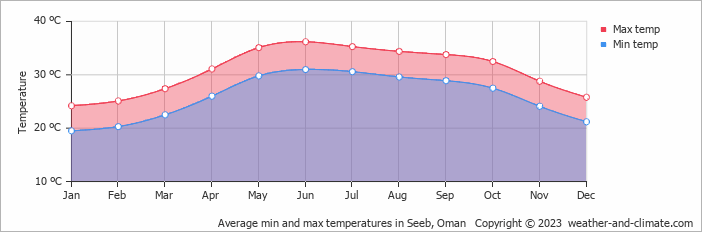
Seeb, Muscat, Oman, experiences significant temperature variation throughout the year. Summers bring daytime highs of 36°C (97°F) in June, while winters cool to 24°C (75°F) in January.
The area sees almost no rainfall, totalling just 78 mm (3.1 in) per year. May is the sunniest month, averaging 11.7 hours of sunshine per day.
Seeb Weather by Month
Pick a month to see the average temperature, rainfall and sunshine in Seeb — and find the best time to visit.

Monthly Temperature in Seeb
Depending on the time of the year, temperatures range from very hot to comfortable in Seeb. Typically, average maximum daytime temperatures range from a very hot 36°C (97°F) in June to a comfortable 24°C (75°F) in the coolest month, January.
Nights vary from 31°C (88°F) in June to around 20°C (68°F) during the colder months.
Check out our detailed temperature page for more information.
Temperature ranges by month
Rainfall in Seeb
Seeb has a dry climate with very low precipitation, averaging 78 mm (3.1 in) of rainfall annually. The climate in Seeb shows significant variation throughout the year. Expect low rainfall in January, the wettest month, with an average of 17 mm (0.7 in) of precipitation over a single rainy day.
In contrast, the driest month September offers drier and sunnier days, with around 0.2 mm (0.01 in) of rainfall over 0 rainy days. For more details, please visit our Seeb Precipitation page.
The mean monthly precipitation over the year, including rain, hail, and snow

The average number of days each month with precipitation

Sunshine Hours in Seeb
Seeb offers a pleasant mix of sunny and slightly overcast days. The difference in sunshine hours between May (11.7 hours daily) and February (8.2 hours daily) provides a bit of variety for visitors and residents.
Visit our detailed sunshine hours page for more information.
Monthly hours of sunshine

Daily hours of sunshine
Humidity in Seeb by Month
The relative humidity is moderate throughout the year in Seeb.
The city experiences its highest humidity in August, reaching 67%. In May, the humidity drops to its lowest level at 42%. What does this mean? Read our detailed page on humidity levels for further details.
Relative humidity over the year

Best Time to Visit Seeb
The consistently dry weather means you can step outside without worrying about rain, though remember to carry water and sun protection. Wondering where to travel based on your weather preferences? Our recommendation tool helps you find destinations with your ideal climate conditions. Use our weather planner to find your perfect destination.
Frequently asked questions about the climate in Seeb
What is the best time to visit Seeb?
January, February, March, November and December typically offer the most optimal weather in Seeb. In contrast, May, June, July, August and September tend to have less optimal conditions. Seeb has a distinct dry season from January to December.
What temperatures can I expect in Seeb?
Daytime highs range from 24°C (75°F) in January to 36°C (97°F) in June. Nighttime lows range from 20°C (68°F) to 31°C (88°F). Temperatures vary considerably through the year.
How much rain does Seeb get?
Annual rainfall is around 78 mm (3.1 in). January is the wettest month with 17 mm (0.7 in), while September is the driest with 0.2 mm (0.01 in).
How sunny is Seeb?
Seeb receives around 3,491 hours of sunshine per year. May is the sunniest month with 350 hours, while February is the cloudiest with just 246 hours. Overall, Seeb enjoys abundant sunshine.
Seeb 3-Day Forecast
Seeb 3-Day Forecast
Seeb on the map
Seeb is highlighted — select any city to see its climate.
Popular this month
Where to go in July — average daytime high across popular destinations.
 Al Buraymī
 43°C (109°F) Nizwa41°C (106°F) Sohar
 38°C (100°F) Muscat36°C (97°F) Khasab36°C (97°F) Seeb35°C (95°F) Sur35°C (95°F) Salalah
 29°C (84°F)


Bucket list
Need travel inspiration? Check out our bucket list articles and be inspired.
Spot turtles in Oman
Oman is one of the countries with the most important turtle beaches in the world. April to June offers the best weather and plenty of Turtles.
Stargaze at the Sharqiya Sands
The Sharqiya Sands (formerly known as Wahiba Sands) is a desert how you imagine a desert to be. An almost uninhabited strip of sand with towering endless dunes that have been formed by the wind into perfectly rounded hills.