Santa Marta Weather & Climate: Best Time to Visit
Average temperatures, rainfall, sunshine and the best time to visit Santa Marta.
Climate overview of Santa Marta
Santa Marta Weather by Month
Pick a month to see the average temperature, rainfall and sunshine in Santa Marta — and find the best time to visit.


Monthly Temperature in Santa Marta
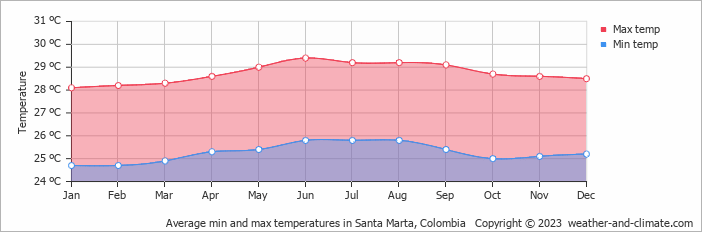
In Santa Marta temperatures are generally consistent throughout the year. Typically, average maximum daytime temperatures range from a comfortable 29°C (84°F) in June to a comfortable 28°C (82°F) in the coolest month, January.
Nights vary from 26°C (79°F) in June to around 25°C (77°F) during the colder months.
Check out our detailed temperature page for more information.
Temperature ranges by month
Rainfall in Santa Marta
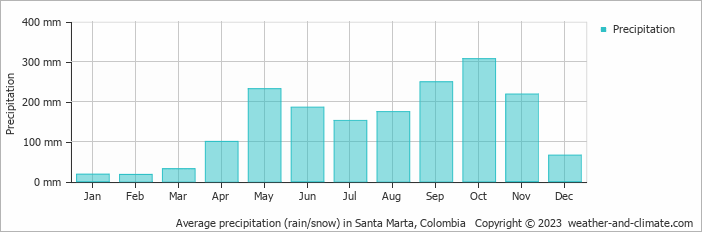
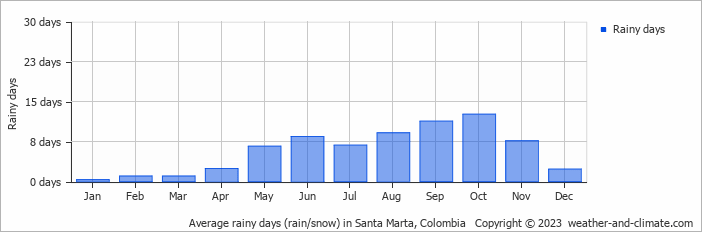
Santa Marta experiences significant rainfall throughout the year, averaging 1749 mm (69 in) of precipitation annually. The climate in Santa Marta shows significant variation throughout the year. Expect heavy rainfall in October, the wettest month, with an average of 307 mm (12 in) of precipitation over 13 rainy days.
In contrast, the driest month February offers drier and sunnier days, with around 17 mm (0.7 in) of rainfall over a single rainy day. For more details, please visit our Santa Marta Precipitation page.
The mean monthly precipitation over the year, including rain, hail, and snow
The average number of days each month with precipitation
Sunshine Hours in Santa Marta
Santa Marta offers a pleasant mix of sunny and slightly overcast days. The difference in sunshine hours between January (9.5 hours daily) and September (6.7 hours daily) provides a bit of variety for visitors and residents.
Visit our detailed sunshine hours page for more information.
Monthly hours of sunshine
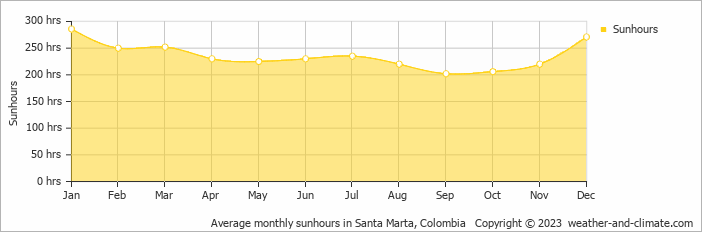
Daily hours of sunshine
Humidity in Santa Marta by Month
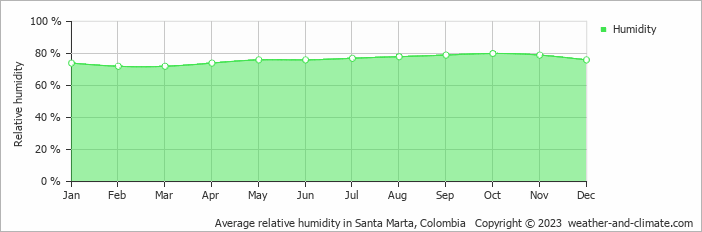
The relative humidity is high throughout the year in Santa Marta.
The city experiences its highest humidity in October, reaching 80%. In February, the humidity drops to its lowest level at 72%. What does this mean? Read our detailed page on humidity levels for further details.
Relative humidity over the year
Best Time to Visit Santa Marta
To make the most of your visit, consider exploring early in the morning or during the pleasant late afternoon hours when the temperature is most comfortable.
Be aware that May, June, August, September, October and November constitute the rainy season, with significant precipitation. Wondering where to travel based on your weather preferences? Our recommendation tool helps you find destinations with your ideal climate conditions. Use our weather planner to find your perfect destination.
Frequently asked questions about the climate in Santa Marta
What is the best time to visit Santa Marta?
January, February, March and December typically offer the most optimal weather in Santa Marta. In contrast, October tends to have less optimal conditions. Santa Marta has distinct dry (January to March) and wet (August to November) seasons.
What temperatures can I expect in Santa Marta?
Daytime highs range from 28°C (82°F) in January to 29°C (84°F) in June. Nighttime lows range from 25°C (77°F) to 26°C (79°F). Temperatures stay relatively stable year-round.
How much rain does Santa Marta get?
Annual rainfall is around 1749 mm (69 in). October is the wettest month with 307 mm (12 in), while February is the driest with 17 mm (0.7 in).
How sunny is Santa Marta?
Santa Marta receives around 2,827 hours of sunshine per year. January is the sunniest month with 286 hours, while September is the cloudiest with just 202 hours. Overall, Santa Marta enjoys abundant sunshine.
Santa Marta 3-Day Forecast
Santa Marta 3-Day Forecast
Santa Marta on the map
Santa Marta is highlighted — select any city to see its climate.
Popular this month
Where to go in July — average daytime high across popular destinations.
 Cartagena
 31°C (88°F) Santa Marta29°C (84°F) San Andrés29°C (84°F) Cali
 28°C (82°F) Medellín26°C (79°F) Pereira24°C (75°F) Bogotá21°C (70°F) Villa de Leyva
 20°C (68°F)


Bucket list
Need travel inspiration? Check out our bucket list articles and be inspired.
 The 10 most alternative cities in South America
Discover South America's top 10 alternative cities! From Valparaíso's vibrant streets to La Paz's high-altitude charm and Medellín's innovative spirit.
5 Hidden Gems in Colombia
Explore Colombia's hidden gems, from El Cocuy's remote beauty to Providencia's serene beaches, offering authentic experiences off the beaten path.
Tayrona National Park: the most beautiful part of Colombia
Visit the park between the months December and March (not February since it is closed) or from June till August (this is high season).
Breathtaking view in Minca
Minca is a tiny village in the tropical rain forest of Colombia and is an oasis of tranquility. Everyone looking for a relatively undiscovered piece of Colombia is in the right place here.