Sandnes Weather & Climate: Best Time to Visit
Average temperatures, rainfall, sunshine and the best time to visit Sandnes.
Climate overview of Sandnes
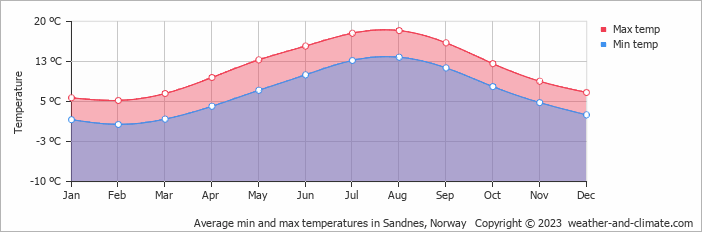
Sandnes, Rogaland, Norway, sees big temperature differences between seasons, with August peaking at 18°C (64°F) and February dropping to 5°C (41°F).
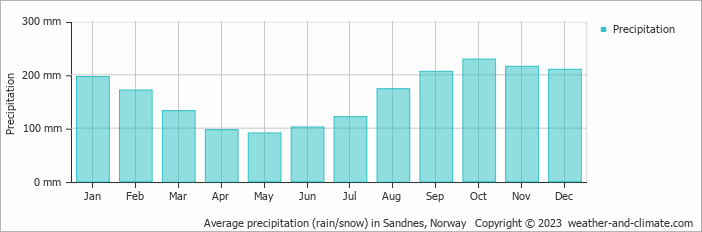
Rain/snowfall is high, totalling around 1945 mm (77 in) per year. October is the wettest month and May the driest. The city also experiences a distinct rainy season from August to February. Sunshine peaks in May, when the city sees around 7.5 hours of sunshine per day.
Sandnes Weather by Month
Pick a month to see the average temperature, rainfall and sunshine in Sandnes — and find the best time to visit.
Monthly Temperature in Sandnes
Visitors to Sandnes can expect significant temperature changes throughout the year. Average maximum daytime temperatures range from a pleasant 18°C (64°F) in August, the warmest time of the year, to a chilly 5°C (41°F) during cooler months like February.
At night, you can expect temperatures ranging from 13°C (55°F) in August to around 1°C (34°F) during February.
Check out our detailed temperature page for more information.
Temperature ranges by month
Rainfall in Sandnes
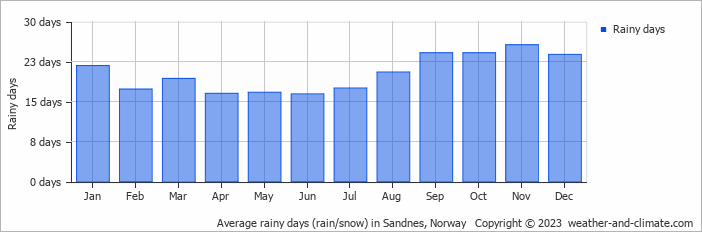
Sandnes is known for its substantial rain/snowfall, with annual precipitation reaching 1945 mm (77 in). Significant seasonal changes in precipitation occur throughout the year. In the wettest month, October it receives heavy rainfall, averaging 229 mm (9 in) of precipitation, recorded across 24 rainy days. In contrast, the driest month May brings less rainfall, with 91 mm (3.6 in) over 17 rainy days. For more details, please visit our Sandnes Precipitation page.
The mean monthly precipitation over the year, including rain, hail, and snow
The average number of days each month with precipitation
Sunshine Hours in Sandnes
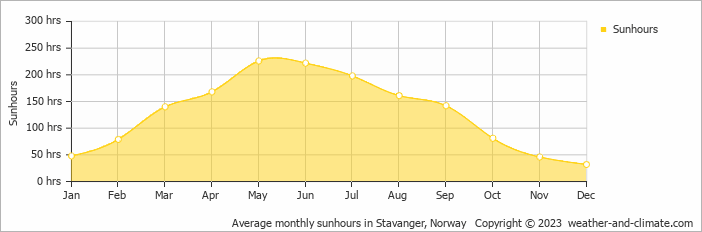
Seasonal changes in sunshine hours are quite dramatic in Sandnes. While May receives considerable daily sunshine with up to 7.5 hours, December marks the darkest time of the year, where sunshine is scarce with only 1.1 hours of sunlight per day.
Visit our detailed sunshine hours page for more information.
Monthly hours of sunshine
Daily hours of sunshine
Humidity in Sandnes by Month
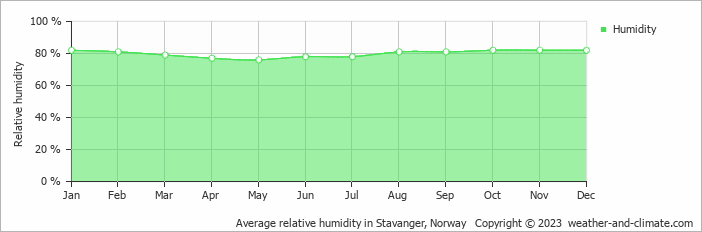
The relative humidity is high throughout the year in Sandnes.
The city experiences its highest humidity in January, reaching 82%. In May, the humidity drops to its lowest level at 76%. What does this mean? Read our detailed page on humidity levels for further details.
Relative humidity over the year
Best Time to Visit Sandnes
The weather brings rainfall of 121 mm (4.8 in) during this period.
Plan accordingly for January, February, August, September, October, November and December, when conditions bring the heaviest precipitation. Need help choosing your next travel destination? We offer a specialized tool that matches you with locations based on your weather preferences. Explore destinations that suit your climate preferences.
Frequently asked questions about the climate in Sandnes
What is the best time to visit Sandnes?
July and August typically offer the most optimal weather in Sandnes. In contrast, January, February, March, April, September, October, November and December tend to have less optimal conditions. Sandnes has a distinct rainy season from August to February.
What temperatures can I expect in Sandnes?
Daytime highs range from 5°C (41°F) in February to 18°C (64°F) in August. Nighttime lows range from 1°C (34°F) to 13°C (55°F). Temperatures vary considerably through the year.
How much rain does Sandnes get?
Annual rainfall is around 1945 mm (77 in). October is the wettest month with 229 mm (9 in), while May is the driest with 91 mm (3.6 in).
How sunny is Sandnes?
Sandnes receives around 1,543 hours of sunshine per year. May is the sunniest month with 226 hours, while December is the cloudiest with just 32 hours.
Sandnes 3-Day Forecast
Sandnes 3-Day Forecast
Sandnes on the map
Sandnes is highlighted — select any city to see its climate.
Popular this month
Where to go in July — average daytime high across popular destinations.
 Oslo
Oslo 22°C (72°F) Kristiansand
 20°C (68°F) Trondheim20°C (68°F) Stavanger
 18°C (64°F) Bergen
 19°C (66°F) Hemsedal
 17°C (63°F) Tromsø17°C (63°F) Reine14°C (57°F)


Bucket list
Need travel inspiration? Check out our bucket list articles and be inspired.
The rugged landscape of the Norwegian fjords
This landscape is rated as the most beautiful in the world and it is something you need to experience at least once in your life.
Discover Norway's Hidden Gem: The Littleisland Lighthouse
Explore Littleisland Lighthouse in Norway - a serene getaway offering unique stays, breathtaking views, and a journey into tranquil simplicity.
The Majestic Geirangerfjord: Norway's Crown Jewel
Explore Norway's stunning Geirangerfjord, famous for its dramatic cliffs, waterfalls, and scenic routes. Breathtaking landscapes and outdoor adventures
Swimming with orcas in Norway
The best travel period to travel to Norway for the orcas are the months October, November December, January and February. Swimming with orcas in Norway might be the bucket list trip of your life.